 English


News


Horizontal Dehydrator vs Vertical Dehydrator:Which Drying Machine Is Better?
2026-07-10 10:07:39
Choosing the right dehydration equipment is essential for achieving consistent product quality,improving production efficiency,and reducing operating costs.Among the most common options,Horizontal Dehydrator and Vertical Dehydrator are two popular types of drying machines used for food processing,commercial kitchens,and industrial applications.
Although both machines use heat and airflow to remove moisture from food and other materials,their airflow direction,drying performance,capacity,and application scenarios are quite different.Understanding the differences between a Horizontal Dehydrator Machine and a Vertical Dehydrator can help businesses select the most suitable drying solution.
What Is a Horizontal Dehydrator?
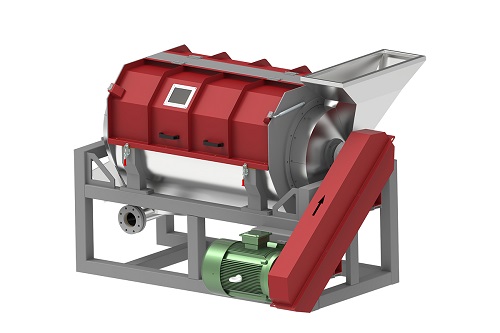
A Horizontal Dehydrator is a drying machine that uses a horizontal airflow system to circulate heated air across multiple trays.The fan pushes warm air from one side of the drying chamber to the other,allowing each tray to receive relatively equal heat and airflow.
This design improves drying consistency and reduces the need to rotate trays during operation.A Horizontal Airflow Dehydrator is commonly used in commercial and industrial food processing because it provides stable drying performance for large batches of products.
Typical applications include:
Dried fruits and vegetables
Beef jerky and meat snacks
Herbs and spices
Seafood drying
Pet food production
Food ingredient processing
What Is a Vertical Dehydrator?
A Vertical Dehydrator is a drying machine that circulates hot air vertically,usually from the bottom upward or from the top downward.The heating element and fan are commonly located at the base or top of the unit.
Vertical dehydrators are usually more compact and affordable,making them popular for home kitchens,small businesses,and low-volume drying applications.
Common uses include:
Homemade dried fruits
Vegetable chips
Small-batch snacks
Home food preservation
Hobby food processing
Horizontal Dehydrator vs Vertical Dehydrator:Key Differences
| Comparison | Horizontal Dehydrator | Vertical Dehydrator |
|---|---|---|
| Airflow Direction | Horizontal side-to-side airflow | Vertical upward/downward airflow |
| Drying Uniformity | More even and consistent | May vary between trays |
| Capacity | Larger capacity options available | Usually smaller capacity |
| Tray Design | Pull-out trays | Stacked trays |
| Temperature Control | More precise | Basic temperature adjustment |
| Production Efficiency | Higher for commercial use | Better for small-scale use |
| Energy Efficiency | Better for large batches | Suitable for occasional use |
| Maintenance | Easier tray access and cleaning | More compact but less convenient |
| Price | Higher initial investment | Lower cost |
1.Drying Uniformity
The biggest difference between a Horizontal Dehydrator and a vertical model is airflow distribution.
In a horizontal system,hot air moves evenly across the entire drying chamber.Each tray receives similar temperature and airflow conditions,which helps achieve consistent moisture removal.
A vertical dehydrator relies on stacked airflow.The trays closer to the heating source may dry faster,while upper trays may require longer drying times.Users may need to rearrange trays during operation to achieve better results.
For professional food production,drying consistency is one of the main reasons businesses choose a Commercial Food Dehydrator with horizontal airflow technology.
2.Drying Capacity and Production Efficiency
Capacity is another important factor when comparing these two machines.
A Horizontal Dehydrator Machine usually features larger drying chambers and multiple stainless steel trays.This allows manufacturers to process more products in a single cycle.
For example,food factories producing dried fruit,meat snacks,or pet treats often require an Industrial Dehydrator that can handle continuous and high-volume production.
Vertical dehydrators are more suitable for personal use or small businesses that do not require large production capacity.
3.Ease of Use and Maintenance
Horizontal dehydrators usually have front-access pull-out trays,making loading and unloading easier.Operators can quickly check product conditions without removing multiple trays.
Vertical dehydrators normally use stacked tray designs.While they save space,accessing middle or lower trays can be less convenient.
For commercial kitchens and factories where efficiency matters,the easier operation of a Horizontal Airflow Dehydrator provides practical advantages.
4.Temperature Control and Product Quality
Different materials require different drying temperatures.
A Food Dehydrator Machine with accurate temperature control can protect product quality by preventing overheating and excessive moisture loss.
Horizontal models generally provide better temperature distribution,which helps preserve:
Natural color
Original flavor
Texture
Nutritional value
This is especially important for sensitive products such as herbs,fruits,and premium snacks.
5.Energy Consumption
Energy efficiency depends on the machine design,insulation,capacity,and drying requirements.
For small batches,a vertical dehydrator may consume less energy because it has a smaller chamber.
However,for large-scale production,a Horizontal Dehydrator can be more efficient because its optimized airflow system reduces drying time and improves heat utilization.
For businesses operating continuously,choosing efficient Industrial Drying Equipment can significantly reduce long-term operating expenses.
Which One Should You Choose?
The choice between a Horizontal Dehydrator and a Vertical Dehydrator depends mainly on your application requirements.
Choose a Horizontal Dehydrator If You Need:
Large production capacity
Consistent drying results
Professional food processing
Better airflow control
Easy tray access
Commercial or industrial operation
A Horizontal Dehydrator Machine is ideal for manufacturers,restaurants,farms,and businesses producing dried food products.
Choose a Vertical Dehydrator If You Need:
Compact equipment
Lower purchase cost
Small-batch drying
Home food preservation
Occasional use
A vertical model is a practical choice for household users or beginners who only need limited drying capacity.
Applications Comparison
| Application | Horizontal Dehydrator | Vertical Dehydrator |
|---|---|---|
| Fruit Drying | Excellent | Good |
| Vegetable Drying | Excellent | Good |
| Meat Jerky Production | Excellent | Limited |
| Herb Drying | Excellent | Good |
| Pet Treat Production | Excellent | Limited |
| Industrial Food Processing | Excellent | Not Recommended |
| Home Use | Suitable but larger | Excellent |
Both Horizontal Dehydrators and Vertical Dehydrators can effectively remove moisture from food products,but they are designed for different needs.
A Vertical Dehydrator is affordable,compact,and suitable for household or small-scale applications.In contrast,a Horizontal Dehydrator offers superior airflow distribution,higher capacity,better drying consistency,and improved efficiency,making it the preferred solution for commercial and industrial food processing.
For businesses looking to produce high-quality dried products at scale,investing in a reliable Horizontal Airflow Dehydrator can provide better performance,productivity,and long-term value.
FAQ
Q1:Is a Horizontal Dehydrator better than a Vertical Dehydrator?
It depends on the application.For commercial and industrial drying,a Horizontal Dehydrator usually provides better airflow distribution,higher capacity,and more consistent results.
Q2:Which dehydrator dries food faster?
A Horizontal Dehydrator often provides faster and more uniform drying because hot air is distributed evenly throughout the chamber.
Q3:Can a Horizontal Dehydrator replace a vertical model?
Yes.A horizontal model can handle most applications of a vertical dehydrator while providing additional advantages for larger-scale production.
Q4:Which dehydrator is better for a food business?
For businesses that require reliable quality,high output,and repeatable results,an Industrial Horizontal Dehydrator is usually the better choice.
Previous:
Types of Hammer Crushers:How to Choose the Right Model?
2026-07-17
Next:
What Is a Horizontal Dehydrator?
2026-07-10
