 English


News


What Is a Plastic Dryer?
2026-06-17 17:04:44
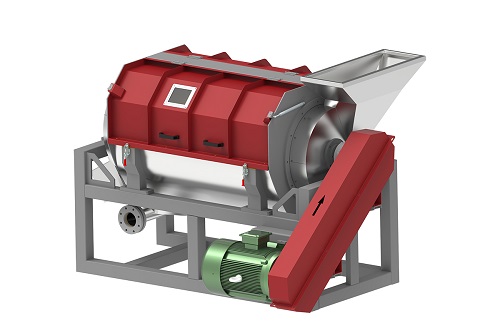
A Plastic Dryer is an essential industrial machine used to remove moisture from plastic raw materials such as pellets,granules,and recycled flakes before processing.In plastic manufacturing,drying is a critical step because even a small amount of moisture can seriously affect product quality during injection molding,extrusion,or blow molding.
plastic dryers are widely used in industries such as injection molding,plastic recycling,packaging,automotive parts,and electronics manufacturing,ensuring stable production quality and reducing defects.
Why Plastic Drying Is Necessary
Most plastic materials naturally absorb moisture from the air during storage,transportation,or recycling.These materials are known as hygroscopic plastics.When heated during processing,the moisture turns into steam,which leads to product defects.
Common problems caused by moisture include:
Surface bubbles or“silver streaks”
Poor surface finish
Weak mechanical strength
Dimensional instability
Reduced transparency
Mold contamination
Therefore,a plastic dryer is used to ensure raw materials are completely dry before production.
How Does a Plastic Dryer Work?
A plastic dryer works by using heated air or dehumidified air to remove moisture from plastic materials.The principle is based on heat transfer and airflow circulation.
In simple terms:
Moisture inside plastic is evaporated by hot air and removed through continuous airflow.
Step-by-Step Working Process
1.Material Feeding
Plastic pellets or granules are loaded into the drying hopper of the machine.
2.Air Heating or Dehumidification
The system generates hot air(or dry air in advanced systems).The air is heated to a specific temperature based on material requirements.
3.Moisture Absorption
Hot,dry air flows through the plastic material,absorbing moisture from the surface and inner layers of the pellets.
4.Air Circulation and Moisture Removal
Moist air is either exhausted or passed through a desiccant system where moisture is removed and the air is re-dried.
5.Continuous Drying Cycle
The process continues until the material reaches the required moisture level for processing.
Main Types of Plastic Dryers
1.Hot Air Dryer
This is the most basic type of plastic dryer.It uses heated air to dry plastic materials and is suitable for general plastics like PP and PE.
2.Hopper Dryer
A hopper dryer is directly installed on injection molding machines,providing continuous drying during production.
3.Desiccant(Dehumidifying)Dryer
This advanced system uses a drying agent such as molecular sieve to achieve extremely low moisture levels.It is ideal for engineering plastics such as:
PET
PC(Polycarbonate)
PA(Nylon)
ABS
4.Vacuum Dryer
A vacuum dryer removes moisture under low-pressure conditions,improving drying efficiency for sensitive materials.
Key Components of a Plastic Dryer
Heating System
Provides controlled temperature for efficient moisture removal.
Drying Hopper
Stores plastic material during the drying process.
Air Blower System
Circulates hot or dry air evenly through the material.
Desiccant System(Optional)
Removes moisture from air in advanced dryers.
Control Panel
Allows operators to set temperature,time,and airflow conditions.
Applications of Plastic Dryers
Plastic dryers are widely used across different industries:
Injection Molding Industry
Used to dry raw plastic pellets before producing precision molded parts.
Extrusion Industry
Ensures smooth production of pipes,sheets,and films without bubbles or defects.
Blow Molding Industry
Used for manufacturing bottles and hollow plastic containers.
Plastic Recycling Industry
Dries recycled flakes and regrind materials before reuse.
Automotive and Electronics
Ensures high-quality plastic components with stable mechanical performance.
Advantages of Plastic Dryers
1.Improves Product Quality
Removes moisture-related defects such as bubbles,cracks,and poor surface finish.
2.Increases Production Stability
Ensures consistent material quality for continuous manufacturing.
3.Reduces Waste
Minimizes defective products caused by moisture contamination.
4.Supports Engineering Plastics
Essential for moisture-sensitive materials that require precise drying.
5.Enhances Processing Efficiency
Improves molding speed and reduces machine downtime.
Plastic Dryer vs Natural Drying
| Feature | Plastic Dryer | Natural Drying |
|---|---|---|
| Drying Speed | Fast (1–6 hours) | Very slow |
| Moisture Control | Precise | Uncontrolled |
| Industrial Use | Yes | No |
| Product Quality | Stable | Unstable |
| Efficiency | High | Low |
Some plastics absorb moisture easily and must be dried before processing:
PET(Polyethylene Terephthalate)
PC(Polycarbonate)
PA(Nylon)
ABS
TPU
Without proper drying,these materials can produce defective products.
FAQ
1.What is a plastic dryer used for?
A plastic dryer is used to remove moisture from plastic materials before they are processed into molded or extruded products.
2.Why is plastic drying important?
Because moisture can cause defects such as bubbles,poor strength,and surface imperfections in finished products.
3.How long does plastic drying take?
Drying time depends on material type and equipment,typically ranging from 1 to 6 hours.
4.What plastics require drying before processing?
Engineering plastics such as PET,PC,PA(Nylon),ABS,and TPU require proper drying.
5.What is the difference between a hopper dryer and a dehumidifying dryer?
A hopper dryer uses hot air,while a dehumidifying dryer removes moisture using a desiccant system for deeper drying performance.
Previous:
What Is A Plastic Washer?
2026-06-17
Next:
Plastic Crusher vs Plastic Shredder: What’s the Difference?
2026-06-13
